
Views: 0 Author: Site Editor Publish Time: 2026-02-16 Origin: Site
Chemicals attack materials daily. Can coatings survive long term?Industries need stronger protection. Chemical resistance now matters more than ever.Cross Linkers make polymers tougher. They build stable molecular networks.In this guide, you will learn how Cross Linkers work, which types are used, and how durability is tested.
Industrial materials exposed to acids, alkalis, fuels, solvents, and cleaning agents must maintain structural integrity under prolonged chemical stress. The effectiveness of Cross Linkers lies not simply in “hardening” a polymer, but in fundamentally reorganizing its molecular architecture. By converting loosely associated chains into an interconnected network, cross linking transforms a material’s permeability, swelling behavior, and long-term stability. Understanding this transformation requires examining structure, density, diffusion behavior, and curing chemistry together rather than in isolation.
At the molecular level, Cross Linkers act as multifunctional connectors. Each molecule contains two or more reactive groups capable of forming covalent bonds with polymer chains. Once these bonds form, independent chains are no longer free to slide past one another. Instead, they become part of a continuous three-dimensional polymer network.
This structural shift produces several key effects:
● Covalent bridge formation anchors chains permanently rather than relying on weak intermolecular forces.
● Restricted molecular mobility reduces the ability of solvents to separate chains.
● Lower free volume limits microscopic pathways through which chemicals can penetrate.
To visualize the transformation:
Structure Type | Chain Mobility | Solvent Response | Thermal Behavior |
Linear polymer | High | Swells or dissolves | Softens when heated |
Lightly cross linked | Moderate | Controlled swelling | Improved stability |
Highly cross linked | Very low | Resists dissolution | Maintains structure under heat |
In practical coating and resin systems, this network formation changes the material from a thermoplastic-like state into a thermoset-like structure, where chemical attack must overcome covalent bonds rather than intermolecular spacing. The result is a measurable improvement in chemical durability and dimensional retention.
Not all cross linked systems perform equally. The cross link density—the number of cross links per unit volume—directly influences resistance to aggressive media. Higher density generally increases resistance, but only when properly controlled.
A useful way to understand the relationship:
● Low density → Larger network spacing → Easier solvent diffusion
● Moderate density → Balanced rigidity and chemical resistance
● Excessive density → Increased brittleness and internal stress
Chemical stability improves because dense networks reduce chain separation under solvent exposure. However, uneven or poorly distributed cross linking can create weak domains that degrade prematurely. Network uniformity is therefore as important as total cross link count.
Performance over time depends on:
1. Consistent reaction throughout the material
2. Controlled cure conditions
3. Correct stoichiometric balance between resin and Cross Linkers
When cross linking is uneven, localized swelling or microcracking may occur, compromising long-term performance even if initial resistance appears acceptable.
One of the most important contributions of Cross Linkers is the creation of a diffusion barrier. Chemical degradation often begins when aggressive molecules penetrate the polymer matrix. Cross linked networks slow this process by limiting transport pathways.
Dense polymer networks influence diffusion in three ways:
• They reduce segmental motion, making it harder for solvent molecules to move between chains. • They create a tortuous path, increasing the distance chemicals must travel. • They resist volumetric expansion, limiting swelling that would otherwise accelerate penetration.
In chemically exposed coatings—such as tank linings or protective industrial finishes—this barrier effect significantly extends service life. Instead of dissolving or softening, the material maintains dimensional stability.
Swelling behavior also improves. Linear polymers may absorb solvent and expand, leading to stress buildup or adhesive failure. Cross linked systems exhibit:
● Lower equilibrium swelling ratios
● Improved retention of hardness
● Reduced risk of stress cracking
The result is a polymer system that not only resists chemical dissolution but also preserves its structural geometry under prolonged exposure.
The effectiveness of Cross Linkers depends heavily on chemical compatibility. Each cross linking agent reacts with specific functional groups in the base polymer. Common reactive groups include hydroxyl (-OH), carboxyl (-COOH), amine (-NH₂), and epoxy functionalities.
A simplified compatibility overview:
Polymer Functional Group | Typical Cross Linker Chemistry | Common Industrial Use |
Hydroxyl (-OH) | Isocyanates, melamine-based systems | Coatings, wood finishes |
Carboxyl (-COOH) | Carbodiimides, epoxy systems | Waterborne coatings |
Amine (-NH₂) | Epoxy cross linking agents | Tank linings, structural resins |
Epoxy groups | Amine or phenolic cross linkers | Protective coatings |
Proper stoichiometry is critical. Insufficient Cross Linkers leave unreacted chains, reducing network integrity. Excess cross linking agents may create internal stress or incomplete curing.
Cure conditions further influence final durability:
● Temperature affects reaction rate and network formation.
● Catalysts determine efficiency and uniformity.
● Humidity or solvent presence can interfere with certain chemistries.
A well-controlled curing process ensures uniform cross link density and optimal chemical resistance. Poor curing can result in soft spots, incomplete bonding, or reduced solvent stability—even when the correct chemistry is selected.
Industrial coatings and resin systems rely on carefully selected Cross Linkers to achieve targeted chemical resistance, adhesion, and mechanical strength. Different chemistries provide distinct reaction pathways, cure behaviors, and resistance profiles. Selecting the appropriate cross linking system is therefore not just a formulation decision—it determines how the final material performs in corrosive, high-temperature, or solvent-rich environments.
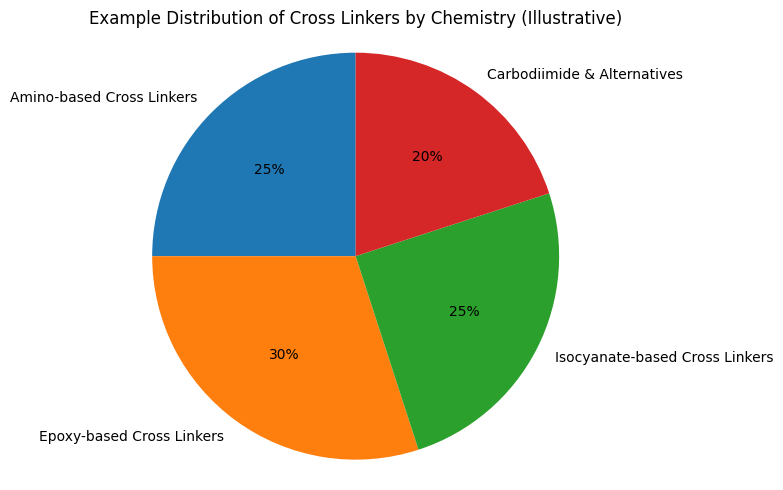
Amino, epoxy, and isocyanate-based Cross Linkers are widely used in industrial coatings because they form durable covalent networks with strong chemical stability. Their reaction mechanisms differ, but all aim to create a tightly connected polymer structure that resists environmental degradation.
Reaction Mechanisms in Brief
● Amino cross linkers (such as melamine derivatives) typically react with hydroxyl-functional polymers through condensation reactions, forming stable ether linkages. These systems are commonly used in high-performance baked coatings where surface hardness and stain resistance are critical.
● Epoxy cross linking agents react with amine or phenolic groups via addition reactions. This process generates dense networks with excellent adhesion and chemical resistance, making them ideal for structural coatings and linings.
● Isocyanate-based cross linkers react rapidly with hydroxyl groups to form urethane linkages. The resulting network exhibits high toughness and solvent resistance, often applied in protective finishes and industrial flooring.
The suitability of these systems varies depending on exposure conditions:
Cross Linker Type | Primary Reaction | Best Suited Environment | Typical Applications |
Amino-based | Condensation with –OH groups | Moderate acids, solvent exposure | Automotive coatings, coil coatings |
Epoxy-based | Addition with amines/phenolics | Harsh chemicals, corrosive fluids | Tank linings, structural coatings |
Isocyanate-based | Reaction with –OH groups | Solvent-rich and impact environments | Industrial floors, protective finishes |
In high-acid environments, epoxy-based Cross Linkers often demonstrate superior stability due to strong ether and amine bonds. Isocyanate systems perform well where solvent resistance and abrasion resistance are equally important. Amino systems, while effective in surface hardness, may require controlled curing conditions to maximize chemical durability.
Carbodiimide Cross Linkers have gained attention in modern industrial coatings, particularly in waterborne systems. Unlike traditional cross linking chemistries that are sensitive to moisture, carbodiimide systems can react effectively with carboxyl groups while maintaining longer pot life and processing flexibility.
In waterborne formulations, where environmental compliance and low volatile emissions are important, carbodiimide chemistry provides a balance between durability and sustainability. The reaction typically forms stable N-acylurea linkages, enhancing resistance to hydrolysis and solvent attack.
Key advantages in flexible or water-based systems include:
• Reduced sensitivity to ambient moisture during curing • Extended working time compared to highly reactive alternatives • Compatibility with acrylic and polyurethane dispersions
Performance characteristics in industrial coatings often include:
● Improved resistance to water and mild chemical exposure
● Maintained flexibility in elastomeric substrates
● Enhanced abrasion resistance without excessive brittleness
These properties make carbodiimide-based Cross Linkers particularly useful in coatings applied to flexible materials, where maintaining elongation while improving chemical resistance is essential.
Epoxy resin systems represent one of the most chemically resistant coating technologies in industrial environments. The choice of Cross Linkers directly influences network density, adhesion strength, and long-term corrosion resistance.
In applications such as tank linings and pipeline coatings, the cross linking reaction determines how effectively the material withstands:
● Continuous immersion in corrosive liquids
● Exposure to fuels and hydrocarbons
● Temperature cycling and mechanical stress
Epoxy Cross Linkers create highly interconnected polymer matrices that resist permeation by corrosive substances. The strong covalent network minimizes swelling and reduces microcrack formation under chemical attack.
Typical Protective Applications
1. Storage tank linings – Require resistance to acids, alkalis, and industrial solvents. Epoxy-amine systems are commonly selected due to their robust chemical durability.
2. Pipeline coatings – Demand corrosion resistance and strong adhesion to metal substrates. High-density cross linked networks reduce underfilm corrosion.
3. Structural protective coatings – Used in bridges, offshore platforms, and industrial facilities where both environmental exposure and mechanical load are significant.
The contribution of Cross Linkers in these systems goes beyond hardness; they directly impact barrier integrity, adhesion stability, and resistance to chemical infiltration.
While increasing cross link density improves chemical resistance, it also introduces structural rigidity. The relationship between durability and flexibility must be carefully managed during formulation.
As cross link density rises, polymer chains become more constrained. This restriction enhances resistance to solvents and thermal deformation but reduces the material’s ability to absorb mechanical stress. The network becomes stronger but less forgiving under impact or dynamic movement.
High-density networks are often preferred in static environments such as tank linings, where movement is minimal and chemical exposure is constant. However, in flexible substrates or vibration-prone environments, excessive rigidity may lead to cracking.
In dynamic systems—such as industrial flooring subjected to mechanical loads or coated metal structures experiencing expansion and contraction—brittleness can compromise durability. Microcracks may form under stress, creating pathways for chemical ingress despite initially strong resistance.
Common risks associated with over-crosslinking include:
● Reduced elongation at break
● Lower impact resistance
● Increased susceptibility to stress cracking
Therefore, selecting Cross Linkers involves balancing chemical stability with mechanical performance requirements.
Achieving optimal performance often requires controlled adjustments rather than maximizing cross link density. Effective strategies include:
• Using multifunctional cross linking agents in moderated ratios to avoid over-constraining the network. • Incorporating flexible segments within the polymer backbone to offset rigidity. • Selecting alternative Cross Linkers, such as carbodiimide systems, when flexibility is a priority.
A practical balance can be summarized as follows:
Performance Priority | Recommended Approach |
Maximum chemical resistance | Higher cross link density with epoxy or amine systems |
Balanced flexibility and durability | Moderate density with flexible backbone components |
Waterborne flexibility with durability | Carbodiimide or hybrid cross linking systems |
In industrial resin systems, the most durable solution is rarely the most rigid one. Instead, effective Cross Linkers are selected and formulated to provide sufficient network strength while maintaining the mechanical resilience required by the application environment.
Selecting the right Cross Linkers for industrial use does not end at formulation. True performance is determined by how well a cross linked network withstands years of chemical exposure, mechanical stress, and environmental fluctuation. Laboratory evaluation bridges the gap between theoretical chemical resistance and real-world durability. Proper testing protocols help predict whether a polymer system will maintain structural integrity, resist swelling, and prevent corrosion under continuous service conditions.
Laboratory evaluation of Cross Linkers focuses on simulating chemical exposure under controlled conditions. These tests assess how effectively the cross linked network resists solvent penetration, hydrolysis, and structural breakdown.
Immersion testing is one of the most widely used methods for assessing chemical durability. Coated panels or molded specimens are submerged in selected chemicals—such as acids, alkalis, fuels, or industrial solvents—for defined periods. The goal is not merely to observe visible damage, but to quantify network stability under prolonged exposure.
Typical evaluation parameters include:
• Surface blistering, discoloration, or cracking • Changes in hardness or adhesion • Loss of gloss or structural cohesion
Solvent resistance testing may also involve spot tests, where aggressive solvents are applied to the surface for a defined contact time. Highly cross linked systems generally show minimal softening and retain surface integrity, while insufficient cross link density often leads to rapid swelling or dissolution.
A structured comparison of immersion test outcomes may include:
Test Parameter | High Cross Link Density | Moderate Cross Link Density | Poorly Cross Linked System |
Surface integrity | Intact | Minor softening | Blistering or peeling |
Hardness retention | High | Slight reduction | Significant loss |
Visible swelling | Minimal | Moderate | Severe |
These laboratory results provide early insight into whether the selected Cross Linkers generate a stable and chemically resistant polymer network.
Swelling behavior offers quantitative evidence of how resistant a cross linked polymer is to chemical penetration. During immersion testing, samples are weighed before and after exposure. An increase in mass indicates solvent uptake, while dimensional expansion reflects internal network disruption.
Key measurement approaches include:
● Weight gain analysis, which calculates percentage increase after exposure. Higher cross link density typically correlates with lower weight gain due to reduced solvent absorption.
● Dimensional change measurement, used to determine volumetric swelling and potential internal stress formation.
● Post-exposure mechanical testing, which evaluates whether tensile strength or modulus has degraded after chemical contact.
Controlled swelling is sometimes acceptable, particularly in flexible systems. However, excessive swelling can create microvoids or stress cracks, eventually compromising corrosion resistance. Therefore, weight change and dimensional stability are critical indicators of long-term chemical durability.
While immersion testing evaluates chemical compatibility, accelerated aging tests simulate years of industrial service within a compressed timeframe. These methods help assess whether Cross Linkers maintain network integrity under fluctuating environmental conditions.
Industrial environments rarely remain static. Materials may experience repeated heating and cooling cycles, combined with varying chemical concentrations. Accelerated aging protocols replicate these fluctuations to evaluate resilience.
Common procedures include:
• Thermal cycling, where samples alternate between elevated and reduced temperatures to test network stability under expansion and contraction stress. • Concentration gradient testing, exposing materials to increasing chemical strengths to observe threshold failure points. • Humidity and combined exposure tests, which evaluate hydrolytic stability in water-rich environments.
Cross linked systems with stable covalent networks generally maintain structural integrity through repeated cycles. In contrast, inadequate cross linking may lead to progressive microcracking or adhesion loss.
Long-term degradation is often gradual rather than immediate. Evaluating Cross Linkers requires monitoring subtle changes that signal network breakdown.
Observable degradation indicators include:
● Progressive reduction in tensile strength
● Increased brittleness or loss of elongation
● Microcrack formation under microscopic inspection
● Surface chalking or adhesion failure
Over time, chemical attack may cleave weaker bonds within the polymer matrix, reducing cross link density. This process increases permeability and accelerates further degradation. Therefore, long-duration monitoring and repeated testing intervals are essential to confirm stability.
In comprehensive evaluation programs, mechanical testing, microscopic analysis, and permeability measurements are combined to provide a complete durability profile. By correlating these results with cross link chemistry and density, formulators can refine Cross Linkers selection to ensure reliable performance under sustained industrial exposure.
Cross Linkers are key to strong polymer systems. They create stable networks that resist harsh chemicals.Understanding density and chemical compatibility matters. Proper control improves long term durability.Smart selection ensures reliable industrial performance. YOHO chemical offers advanced Cross Linkers with stable curing and trusted technical support. Their solutions help deliver lasting value.
A: Cross Linkers are multifunctional chemicals that bond polymer chains into stable networks, improving chemical resistance and structural durability.
A: Cross Linkers reduce chain mobility and limit solvent diffusion, creating a dense network that resists swelling and chemical attack.
A: Common Cross Linkers in epoxy systems include amine, phenolic, and isocyanate agents, selected based on exposure conditions and curing requirements.
A: Cross Linkers performance is assessed through immersion tests, swelling measurements, and mechanical retention after chemical exposure.


